
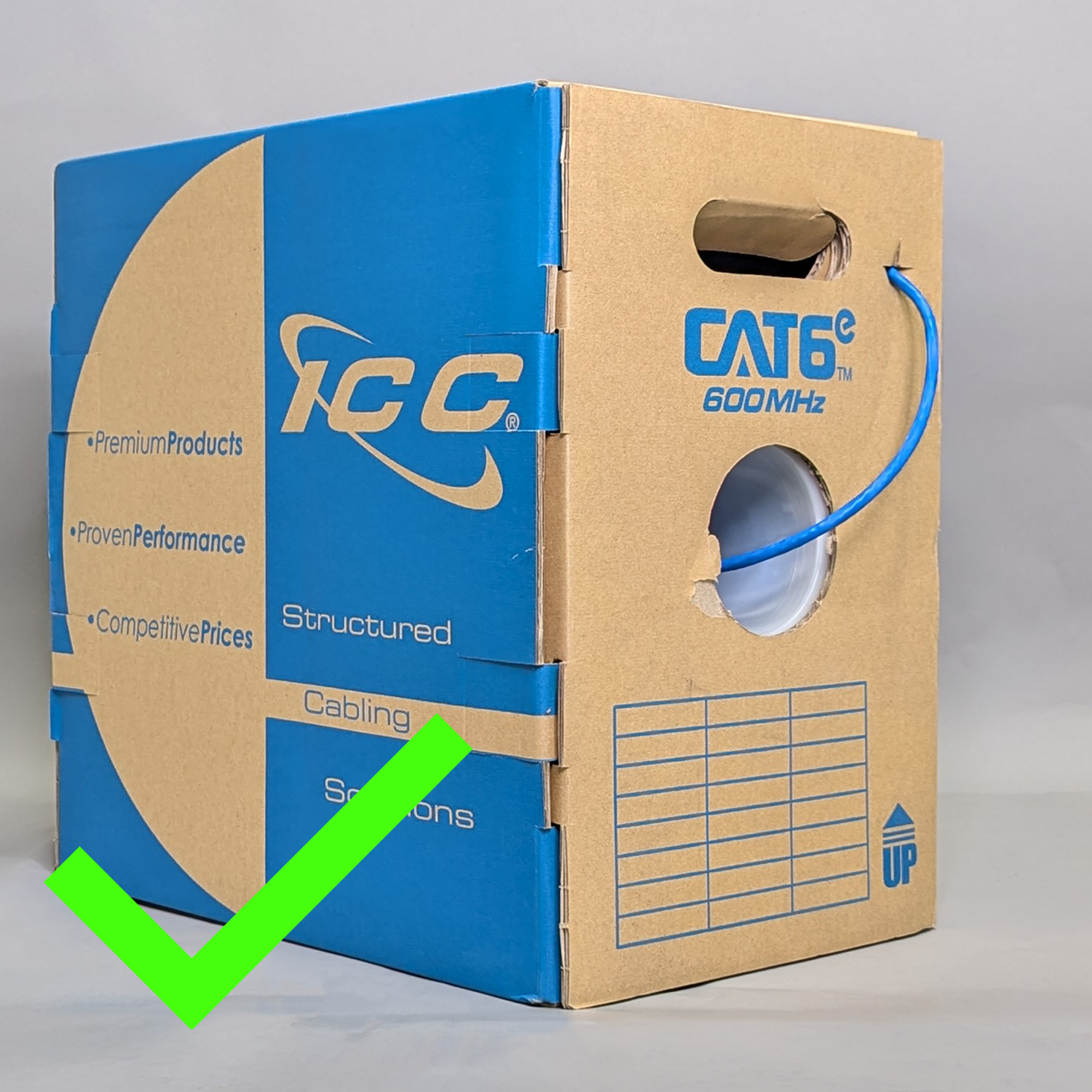
REELEX® packaging is an advanced coil system used in 1000 ft bulk cable boxes to deliver tangle-free, twist-free payout directly from the center of the box. By layering cable in a precise figure-8 pattern, REELEX eliminates the need for reels, making transport and on-site pulls simpler and more efficient. This method is purpose-built to help installers save time and maintain cable integrity throughout long runs.
The following guidelines will help prevent tangles, kinks, and potential signal issues, ultimately saving time and resources.
Why You Should NEVER Push Cable Back into a REELEX Box.

- Protect Signal Integrity: Kinks and sharp bends from forcing cable back inside can degrade electrical performance, increasing crosstalk and altering impedance—leading to slower speeds, intermittent connections, or total signal loss.
- Prevent Snags and Knots: Re-inserting cable disrupts the figure-8 coil, making it prone to snags and tight knots that often require cutting the cable to fix.
- Avoid Permanent Kinks and Damage: Forcing cable into unnatural shapes introduces twists and kinks that permanently deform the internal conductors and insulation.
- Save Time and Materials: Recovering cable from a compromised box wastes time and frequently results in discarding damaged sections, delaying projects, and raising costs.
If cable needs to be retracted, feed it back through the small hole near the handle or tape to the box instead of pushing it into the payout tube.
Important: a REELEX box is designed exclusively for cable extraction, not reinsertion.

Recommended Practices for Storing Surplus Cable
Even with thorough planning, some surplus cables may be unavoidable. The following practices are recommended for its proper management and to preserve its quality:
- Secure Coil Fastening: Once coiled, secure the bundle with reusable hook-and-loop fasteners (e.g., Velcro ties) or zip ties to maintain neatness and prevent unraveling.
Caution: Avoid overtightening fasteners, as excessive compression can damage the cable’s internal structure.
- Adherence to Bend Radius Limitations: Always respect the minimum bend radius for CAT6 cable (typically four times its diameter, e.g., 1 inch for a 0.25-inch cable). Strictly avoid sharp bends or kinks (permanent creases), as these can permanently impair internal conductors and insulation, leading to performance issues.
- Optimal Coiling (Over-Under Technique): For any extracted surplus cable, coil it neatly using the “over-under” method. This technique respects the cable’s natural lay and prevents twists.
Procedure: Alternate bringing the cable “over” and then “under” your hand to create natural, flat, untwisted loops. Avoid continuous, single-direction winding, as this introduces detrimental twists.
- Protected Storage Environment: Store coiled cable in a clean, dry, and temperature-controlled environment. Avoid direct sunlight, extreme temperatures, excessive moisture, and harsh chemicals.
Heavy objects, preferably off the floor in bins or on hooks to prevent crushing and accidental damage.
- External Attachment to the Box: If a small quantity of excess cable has been extracted and will not be reinserted, it may be neatly coiled and affixed to the exterior side of the REELEX box using tape.
Important Note: Ensure the tape does not obstruct the payout hole or impede the smooth dispensing of remaining cable. A low-residue adhesive tape is recommended. This practice helps keep the workspace tidy and reduces the risk of loose cable snagging.
- Precise Measurement: Accurately measure cable runs and carefully plan installation pathways to minimize excess cable, which is the most effective waste reduction strategy.
- Comprehensive Labeling: Clearly label all surplus cables with its type (e.g., “CAT6 UTP”), approximate length, and the date of storage or project origin. This facilitates easy identification and future reuse.