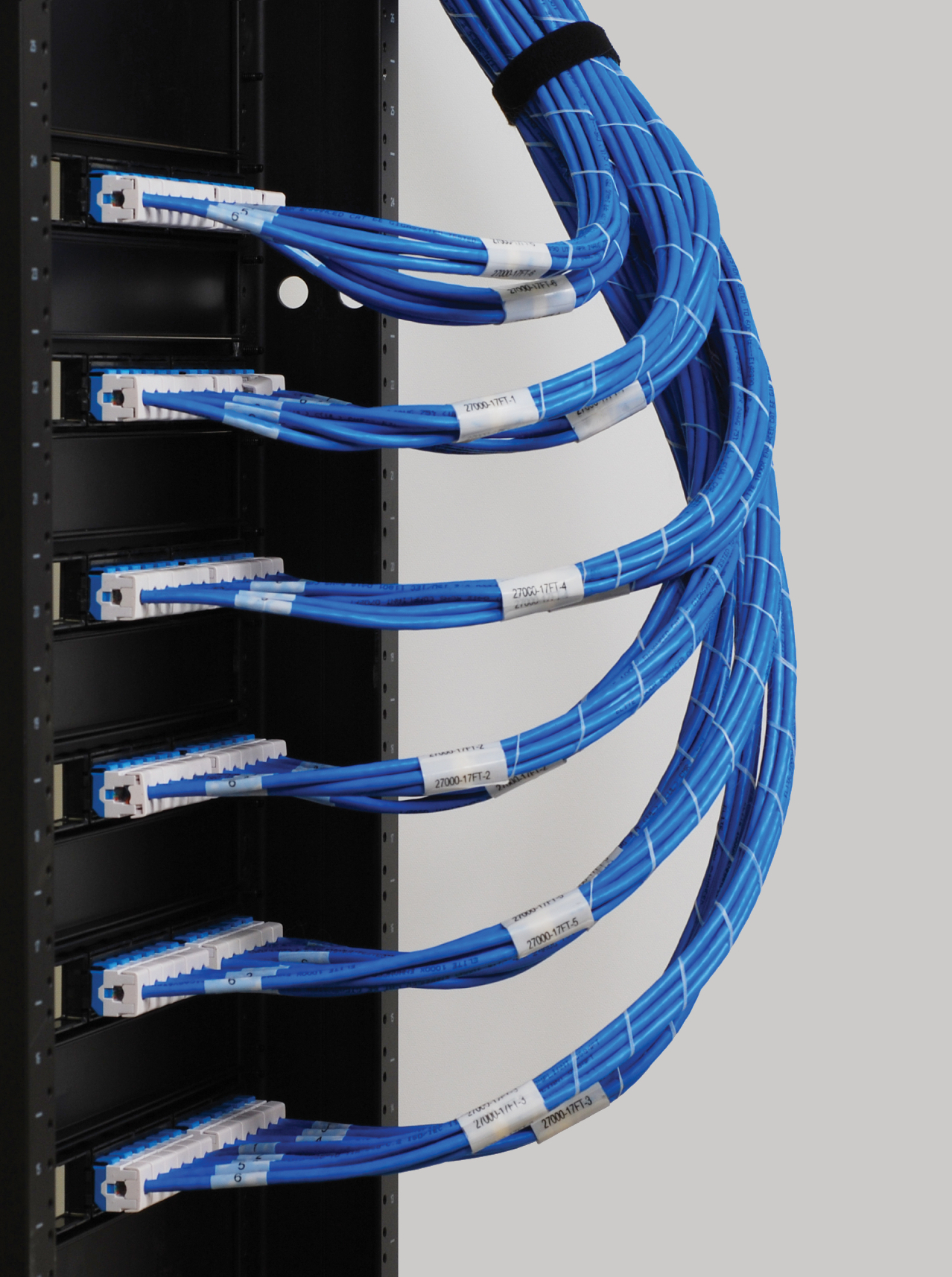
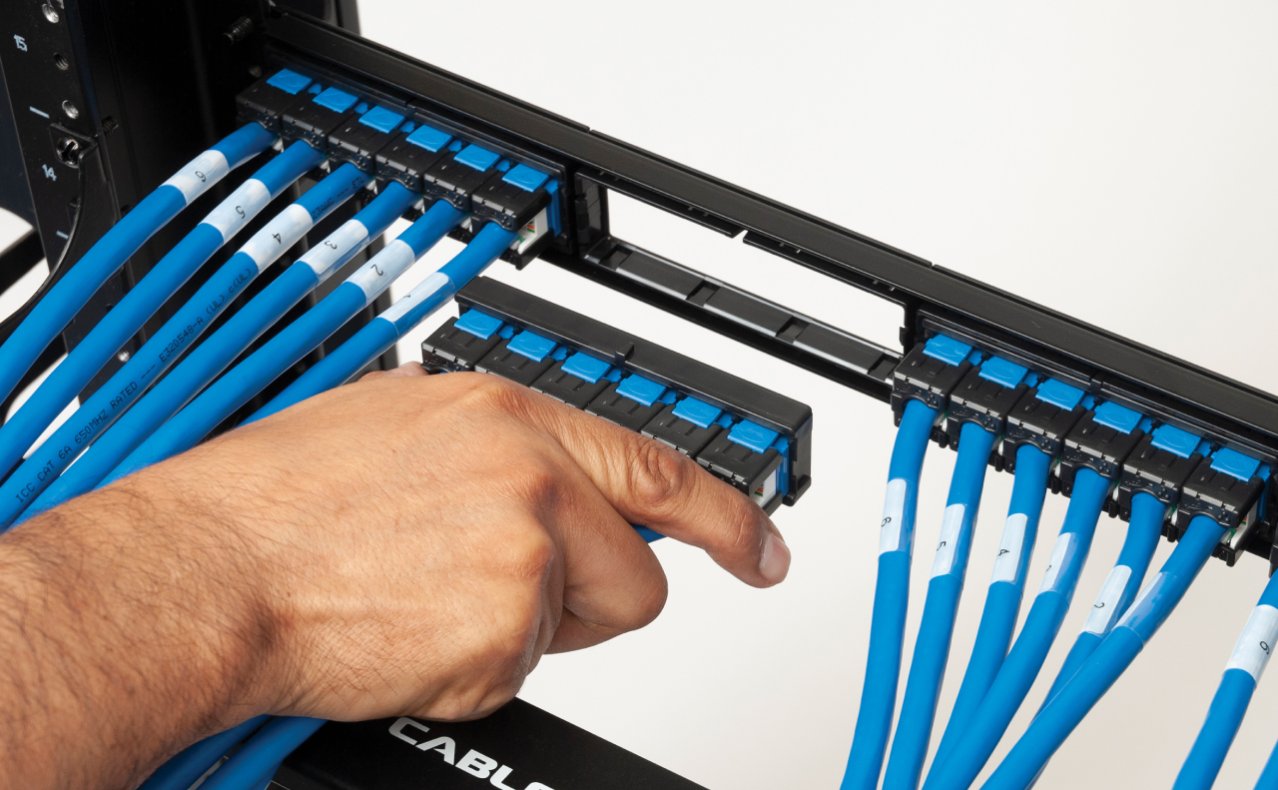
HiPerLink Pre-Terminated Ethernet Patch Panel Cabling System
Built by Cablesys Brand for Small to Mid-Size Data Centers
This innovative system offers an 85% reduction in installation time, swift equipment deployment, and minimal downtime during MACs (moves, adds, and changes). With its low-waste installation approach, labor and material costs are reduced by 40–60%.
A unique cassette is attached to the end of a cable assembly, specifically designed to snap into a patch panel bracket. This bracket can hold four cassettes, providing up to twenty-four Ethernet ports in a single rack mount space.
Optimal Sites
Designed for deployment in enterprise data centers, colocation facilities, and secure network environments. Pre-terminated systems reduce reliance on external installation crews, allowing internal IT teams to complete installations faster while maintaining control over sensitive infrastructure.
TIA Compliant
Each cable assembly, or trunk cable, undergoes rigorous testing to surpass the industry performance standards set by TIA. These cables fully comply with the ANSI/TIA-942-A-1 standard designed for data centers, ensuring they meet the required standards. Additionally, each cable assembly is backed by a comprehensive 15-year performance warranty.
Choosing the Right Connectivity
• Rack-to-Rack: Connect patch panels
• Rack-to-Switch: Connect patch panel to switch or router
Rack-to-Rugged Mobile Box: Terminated with 110-type IDC, available in CAT6 only, reliable in rough terrain
Rack-to-Mobile Outlet Box: Uses keystone jacks, supports CAT6 and CAT6A, allows shielded jack and cable options for greater flexibility
How to Install
Step 1
Install the bracket panel, which is designed to fit network racks and cabinets with 19-inch rack mount widths.
Step 2
Open the package.
Step 3
Snap in bezels. Done!
Making Changes
The cassette can be easily removed using a flathead screwdriver.
Cable Management Brackets
Cable management brackets help secure and organize cables on the front and rear of the patch panel.
Bundle6 Patch Cords
Cablesys offers pre-bundled and labeled patch cords, providing a convenient solution for routing six cables simultaneously. The wrap is removable.
How to Order:
1. Choose Connectivity
Bezel to Bezel (Model No. PCA)
Bezel to Modular Plugs (Model No. PCB)
Bezel to Outlet Box (Model No. PCC)
Bezel to Mobile Box (Model No. PCC)
2. Choose Cable Rating
Riser-rated CMR
Plenum-rated CMP
Consider fire ratings of material and airflow. Most data center environments can use riser-rated cable (CMR). Use CMR in vertical settings, such as cable running between floors through cable risers. Use plenum-rated cable (CMP) in raised flooring systems, drop ceilings, and air handling ducts. Always consult with city or building authorities for the latest codes before deciding the type of cable.
3. Choose Bandwidth
10G CAT6A Shielded (FTP)
10G CAT6A Unshielded (UTP)
1G CAT6e Unshielded (UTP)
VolP CAT5e Unshielded (UTP)
Consider what active equipment or devices will be supported throughout the entire network. Use Foiled Twisted Pair (FTP) in environments with high Electromagnetic Interference (EMI) or Radio Frequency Interference (RFI). Use Unshielded Twisted Pair (UTP) in environments with low interference.
4. Choose Length
Standard (25, 50, 75, and 100 feet)
Custom (10 to 295 feet)
Consider accessibility to active equipment and the layout of the room when measuring, then round up to the nearest foot. Cablesys pre-builds and stocks cable assemblies in standard lengths to help reduce lead time and ship orders faster. Cablesys also custom builds up to 295 feet per TIA® standard.
A bracket panel is required to mount the cabling onto the rack or cabinet. The panel has four ports to snap in bezels. If there are any unused ports, Cablesys offers a blank bezel to cover them. Cable management brackets help organize and secure cords and cables.
Answers to common questions about HiPerLink pre-terminated cabling systems.
1. Since there is no field termination, what happens if a jack, bezel, or port has an issue during installation or after delivery?
Please provide a brief description and photos of the issue to cs@icc.com. ICC will review the information provided and advise on the appropriate next steps based on the specific issue and product condition.
2. If our office layout changes in the future, can we replace or add individual bezels without replacing the entire patch panel?
Yes. ICC’s HiPerLink system is designed with modular bezels that can be removed, replaced, or added as layouts change. This gives clients more flexibility to adjust their cabling layout without automatically requiring a full patch panel replacement.
3. Can HiPerLink assemblies be pulled through conduit, ceiling pathways, or underground runs?
HiPerLink assemblies are bundled with cable binding to help keep the cable legs organized, protect the factory layout, and make routing into the rack easier.
Because conduit, underground pathways, and other tight routes may damage the binding or place stress on the connectors, ICC does not recommend using HiPerLink assemblies for these types of pulls.
4. What testing documentation is included with each assembly? Do you provide individual test reports or certification results?
HiPerLink assemblies are production tested before shipment as part of ICC’s quality control process. Individual test reports or certification documents are not included with each assembly.
The system is designed for small business and corporate IT environments that need a factory-built, ready-to-install cabling solution without the added time and labor of field termination. For projects that require formal closeout test reports or third-party certification records, please review those requirements before ordering.
5. Can these assemblies integrate with our existing structured cabling infrastructure, or do we have to standardize on the entire HiPerLink system?
HiPerLink assemblies can be used as part of an existing structured cabling infrastructure, depending on the application and layout.
The system is best suited for controlled pathway applications such as rack-to-rack, cabinet-to-cabinet, or rack-to-work-area connections where the factory-terminated assembly can be safely routed without damaging the cable or connectors.